Cravebridge
Practical Cow Lighting: Modern Choices for Healthier Herds

Introduction — a small farm scene
I remember walking into the shed at dawn; the cows were restless, ears flicking, eyes dim in the gray light. Cow lighting matters; it shapes feeding, milk yield, and calm. Data say good lighting can lift milk production by several percent and cut nighttime accidents — numbers we track, oui. So I ask: how do we pick lights that help cows, not just save electricity? (simple question — big impact)
We see farms using old high-pressure sodium bulbs, bulbs that flicker and run hot. I have watched staff bump into stalls because the light was uneven. That tells me something: the problem is not only wattage, it is spectrum and timing. We need clear measures — lumen efficacy, CRI, photoperiod control — so decisions are not guesswork. In the next part, I will dig into what usually fails. But first, let me set the scene: short days, long shifts, and animals that read light differently than we do. — funny how that works, right?
Where traditional systems break — the real faults
led cattle shed lighting is often sold as a fix, but many installs repeat old mistakes. I have seen rows of LEDs bolted up with no dimming, no timers, no spectrum control. Technical detail: poor installations ignore power converters and surge protection. The result: flicker, early failures, and stressed cows. Look, it’s simpler than you think — the tech is fine, the application is not.
What goes wrong, exactly?
First, designers copy human lighting standards. That fails because cows need longer photoperiod and different kelvin ranges. Second, installers mix cheap drivers with unreliable wiring; edge computing nodes and smart controllers sit unused in a corner. Third, maintenance is neglected — dust, ammonia, and humidity shorten lamp life fast. I’ve audited sheds where light levels varied 300% across a barn. That creates uneven feeding and rank behavior. In short: mismatch in spectrum, poor control strategy, and weak electrical design are the three big flaws.
Principles for new cow lighting — what I’d choose next
We should move from product wants to system needs. New designs put animal biology first. I explain principles: correct spectrum, controllable photoperiod, and robust power management. For example, LEDs with tunable spectrum let us boost blue light in morning and warmer hues at dusk. That supports circadian rhythm and can boost milk yield without extra feed. Also, integrate reliable power converters and surge protection; do not cheap out.
 What’s next for farms?
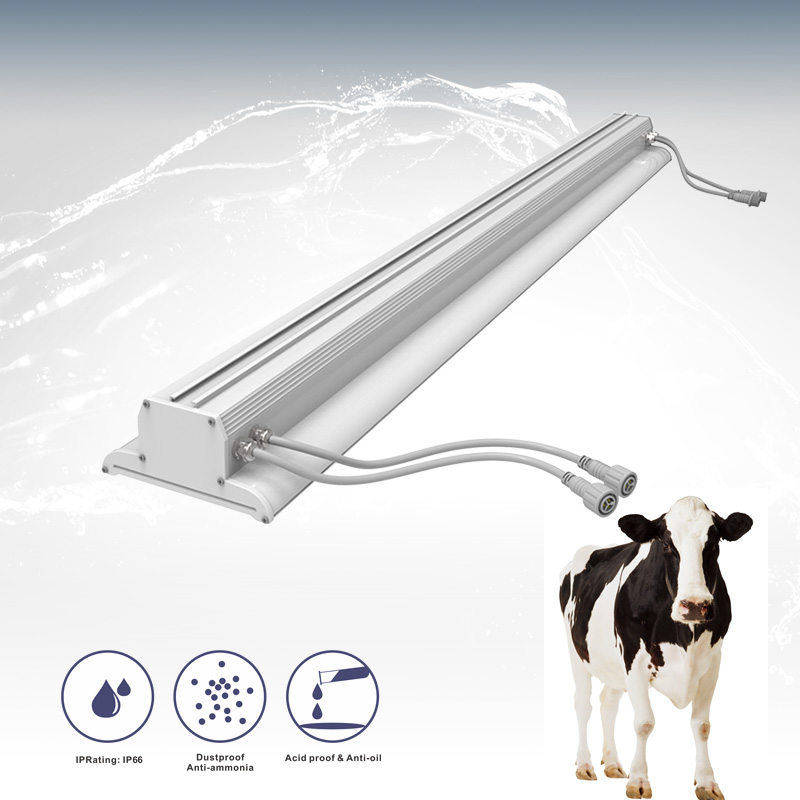
Install smart controls that are simple to operate. Use sensors not for show, but to adjust lux across the barn so every cow sees similar light. (That consistency matters.) I recommend trials: retrofit a pen, measure milk and behavior for 8 weeks, then scale. I have run pilots — small, focused, with direct observation — and seen steady gains. And note: led cattle shed lighting units work best when paired with good controllers and a maintenance plan.
To choose, evaluate three key metrics: spectral match (does the lamp support the right kelvin and CRI for cattle?), control flexibility (timers, dimming, sensor input), and electrical robustness (quality drivers, surge protection). I suggest rating each on a 1–5 scale during trials. If you want a practical checklist: measure lux at cow head height, confirm tunable spectrum, and inspect driver specs. These steps feel small — but they change the results.
Conclusion — how we judge and move forward
We learned that lights alone do not fix behavior. I believe the right system does. Evaluate by those three metrics, run short trials, and keep a simple maintenance log. If you ask me, start with a controlled retrofit and watch the herd for four weeks. The benefits show in calmness, fewer injuries, and small but reliable milk gains. In the end, we pick solutions that match biology and farm routines. For real-world replacement options and support, check szAMB for practical kits and guidance.